Webinar

Celebrate Our
25th ANNIVERSARY
with Us!
Enjoy 25% Off
All ON DEMAND CE Webinars,
Seminars & Reading Programs!
The WILLIAM J. PIEPER, M.D. LECTURE
When Our Choices Are Not Really Our Own: How Hidden Motives for Unhappiness Keep Us
from Creating the Life We Truly Want, and What Can Be Done
Martha Heineman Pieper, Ph.D.
Member Rates: Regular: $30 22.50 | Early Career Professional: $20 15 | Student: $15 11.25
Non-Member Rates: Regular: $35 26.25 | Early Career Professional: $30 22.50 | Student: $20 15
1.5 CEs for Psychologists, Social Workers, and Professional Counselors
Description
Dr. Martha Heineman Pieper presents a new understanding of what goes wrong when choices are unfree, namely that an unrecognized addiction to unhappiness lies behind many of the large and small decisions individuals experience as freely chosen. She suggests ways in which parents, therapists, teachers, and individuals can enhance their ability to help others as well as themselves develop the capacity to make good choices that are not in the service of hidden agendas. Dr. Pieper frames her understanding in the broader context of selected philosophical and psychological views of freedom of choice while illuminating some limitations of these views.
Learning Objectives
By the end of the webinar, participants will be able to:
- List three examples of individuals having the illusion of free will while making choices that are self-sabotaging.
- Describe the author’s theory about the role of self-regulatory control over one’s own personal meaning in the ability to make choices that do not satisfy hidden agendas.
- Describe the author’s theory regarding how a need for unhappiness underlies hidden agendas that make choices unfree.
- Describe how a need for unhappiness is acquired and unknowingly pursued when children misidentify the unhappiness they experienced for happiness.
It’s Easy to Register, Take Programs, and be Awarded CEs
- When you register for a program, a personal account is created for you at My Account
- Log in at My Account using your username and password to access all the programs for which you registered
- After watching seminar and webinar videos and reading articles, log in to My Account to complete the evaluations, exams, and receive your CE Certificates
Presenter
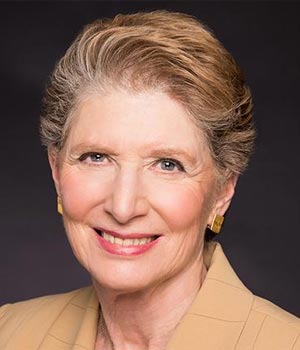
Martha Heineman Pieper, Ph.D.
Dr. Martha Heineman Pieper is an author and psychotherapist who works with children and parents and serves as a consultant to agencies and other mental health professionals. She graduated from Radcliffe College and received her Ph.D. in clinical social work from the University of Chicago. Dr. Pieper is a founding Board member of Smart Love Family Services, for which she provides ongoing consultation and insight to the clinical and early childhood education staff. She also serves on the Board of the Intrapsychic Humanism Society. Both of these non-profit agencies are based on Intrapsychic Humanism, a comprehensive psychology of child development, psychopathology and treatment developed by Dr. Pieper and her late husband, William J. Pieper, MD.
Their theory is published in a scholarly book for professionals, Intrapsychic Humanism: An Introduction to a Comprehensive Psychology and Philosophy of Mind (Falcon II Press, 1990). For the general public, they wrote a best-selling parenting book, Smart Love: The Comprehensive Guide to Understanding, Regulating, and Enjoying Your Child (Smart Love Press, LLC, 2011) and a popular adult self-help book, Addicted to Unhappiness: How Hidden Motives for Unhappiness Keep You From Creating the Life You Truly Want, And What You Can Do (2nd Edition, Smart Love Press, LLC, 2019). Dr. Pieper also authored two best-selling, award winning children’s books, Mommy, Daddy, I Had a Bad Dream! (Smart Love Press, LLC, 2012) and Jilly’s Terrible Temper Tantrums: And How She Outgrew Them (Smart Love Press, LLC, 2017), as well as The Happiest Preschool: A Manual for Teachers with Kelly Perez (Smart Love Press, LLC, 2024).
Dr. Pieper has written and presented on Inner Humanism® psychotherapy, and also on applications of the theory of Intrapsychic Humanism to teaching, parenting, foster care, the question of free will, and children’s dreams and fantasy life, among other topics. Many of her presentations and articles are available as ON DEMAND programs for continuing education credit here.